A dead car battery is one of the most frustrating experiences for any vehicle owner. It always seems to happen when you’re in a rush or far from help. Understanding when and how to replace your battery can save you time, stress, and money. Whether you’re a daily commuter or an occasional driver, it’s vital to know the signs of a failing battery, how replacement works, and where to get it done professionally. If you’re unsure where to start, this guide will walk you through everything you need to know about auto battery replacement.
Why Auto Batteries Fail
Auto batteries don’t last forever. Most car batteries have a life span of 3 to 5 years, but several factors can shorten this:
- Extreme Weather: Very hot or cold temperatures put added strain on batteries.
- Short Drives: Frequent short trips don’t allow the battery to recharge fully.
- Corrosion: Dirt and rust on the terminals can interfere with charging.
- Electrical Load: Using headlights, sound systems, and other electronics while the engine is off drains the battery faster.
Knowing what causes battery degradation can help prevent unexpected failures and extend your battery’s life.
Warning Signs Your Battery Needs Replacement
Pay attention to these early red flags before you get stuck:
- Slow Engine Crank: Your engine takes longer than usual to start.
- Dim Lights: Headlights or interior lights appear unusually dim.
- Battery Warning Light: This indicator appears on your dashboard.
- Frequent Jump Starts: If you’re jump-starting your car more often, your battery likely needs replacing.
- Swollen Battery Case: Heat damage or internal failure can cause the battery casing to swell.
If you notice one or more of these symptoms, it’s time to test your battery.
How to Test Your Battery
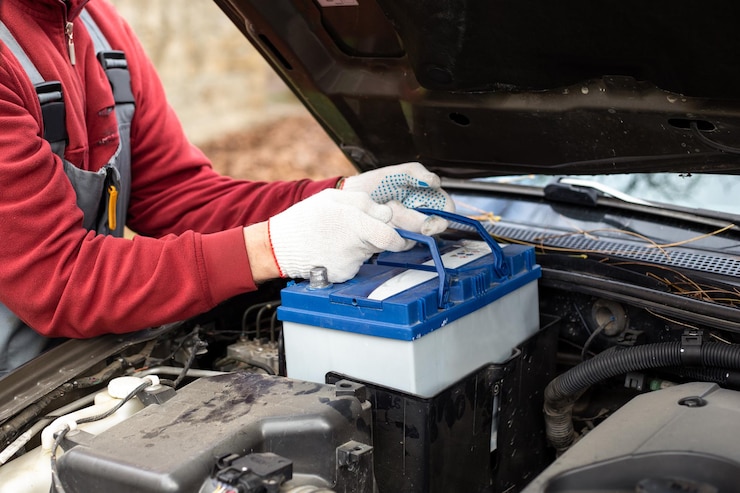
Testing a car battery is fairly simple:
- Use a Multimeter: Connect it to the battery terminals to check voltage. A fully charged battery should read around 12.6 volts.
- Professional Testing: Many auto repair shops offer free battery checks.
- Load Testing: Mechanics use specialized equipment to simulate engine starting and check how your battery holds up under stress.
Don’t ignore weak readings—early action can save you from breakdowns.
Choosing the Right Replacement Battery
Not all car batteries are the same. Here’s what you need to consider:
- Size and Terminal Configuration: Check your car’s manual to find the correct group size.
- Cold Cranking Amps (CCA): This measures the battery’s ability to start your car in cold temperatures. Choose a battery with a CCA rating that matches or exceeds the manufacturer’s recommendation.
- Reserve Capacity: The longer your battery can power your vehicle’s systems when the engine is off, the better.
- Brand & Warranty: Stick to reputable brands that offer solid warranties—typically 3 to 5 years.
Investing in a quality battery may cost more upfront but pays off with reliable performance.
DIY vs Professional Replacement: What’s Better?
Some vehicle owners prefer to change batteries themselves, but it isn’t always advisable:
- DIY Benefits: Cheaper, convenient, and a learning experience.
- DIY Risks: Incorrect installation can damage the electrical system.
- Professional Advantage: Certified mechanics ensure proper installation and recycling of the old battery.
Many luxury auto repair centers offer battery replacement as part of routine maintenance. This is especially useful for high-end vehicles with complex systems.
Where to Get Your Battery Replaced
When replacing your battery, choose a trusted local service center that offers:
- Free Diagnostics: To confirm the battery is the real issue.
- Genuine Parts: OEM or high-quality aftermarket batteries.
- Certified Technicians: To ensure safe, clean, and quick installation.
Some auto shops even offer mobile battery replacement at your home or office—an ideal solution if your vehicle won’t start at all.
Maintenance Tips to Extend Battery Life
Once you’ve replaced your battery, take care of it with these tips:
- Regular Inspections: Check terminals for corrosion and tighten connections.
- Limit Electronics When Engine Is Off: Avoid draining the battery unnecessarily.
- Drive Longer Distances: Allow time for the battery to recharge fully.
- Keep it Clean: Wipe off dirt and grease from the battery casing.
With proper maintenance, your new battery can serve you reliably for years.
Final Thoughts
Replacing your car’s battery doesn’t have to be a stressful experience. By recognizing early warning signs, choosing the right battery, and deciding between DIY or professional service, you can avoid the inconvenience of a breakdown. It’s always better to be proactive than reactive when it comes to vehicle care. And for those who drive premium cars or simply want peace of mind, visiting a luxury auto repair shop can ensure top-quality service with long-term reliability.